
The Fairy Godmother
Ebony Staten, founder and executive director of The Vogue Room Foundation, is proving that a dorm room can be a foundation.
"A beautiful dorm room isn't the destination," Ebony says. "It's the foundation."
The students have a name for her: fairy godmother.
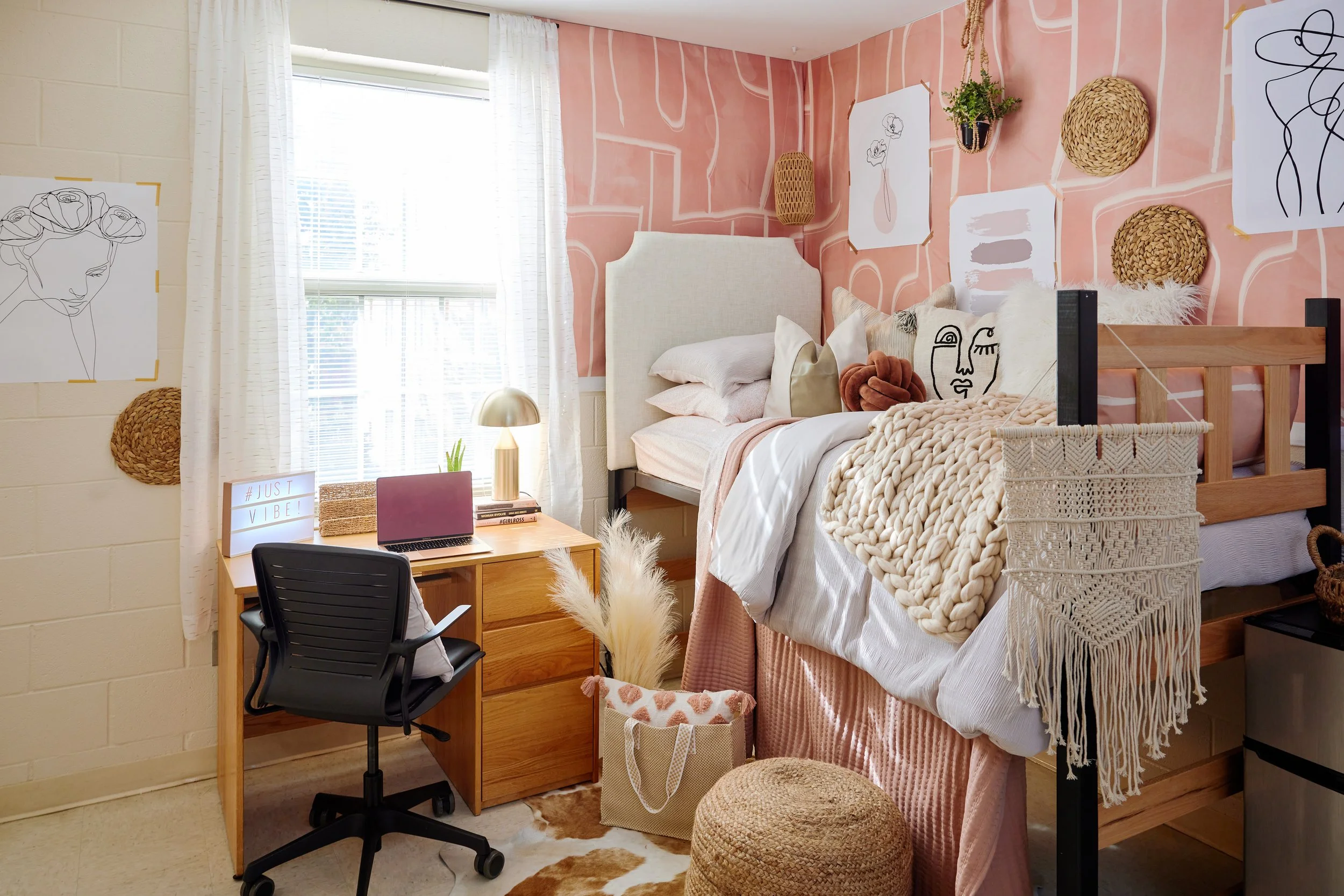
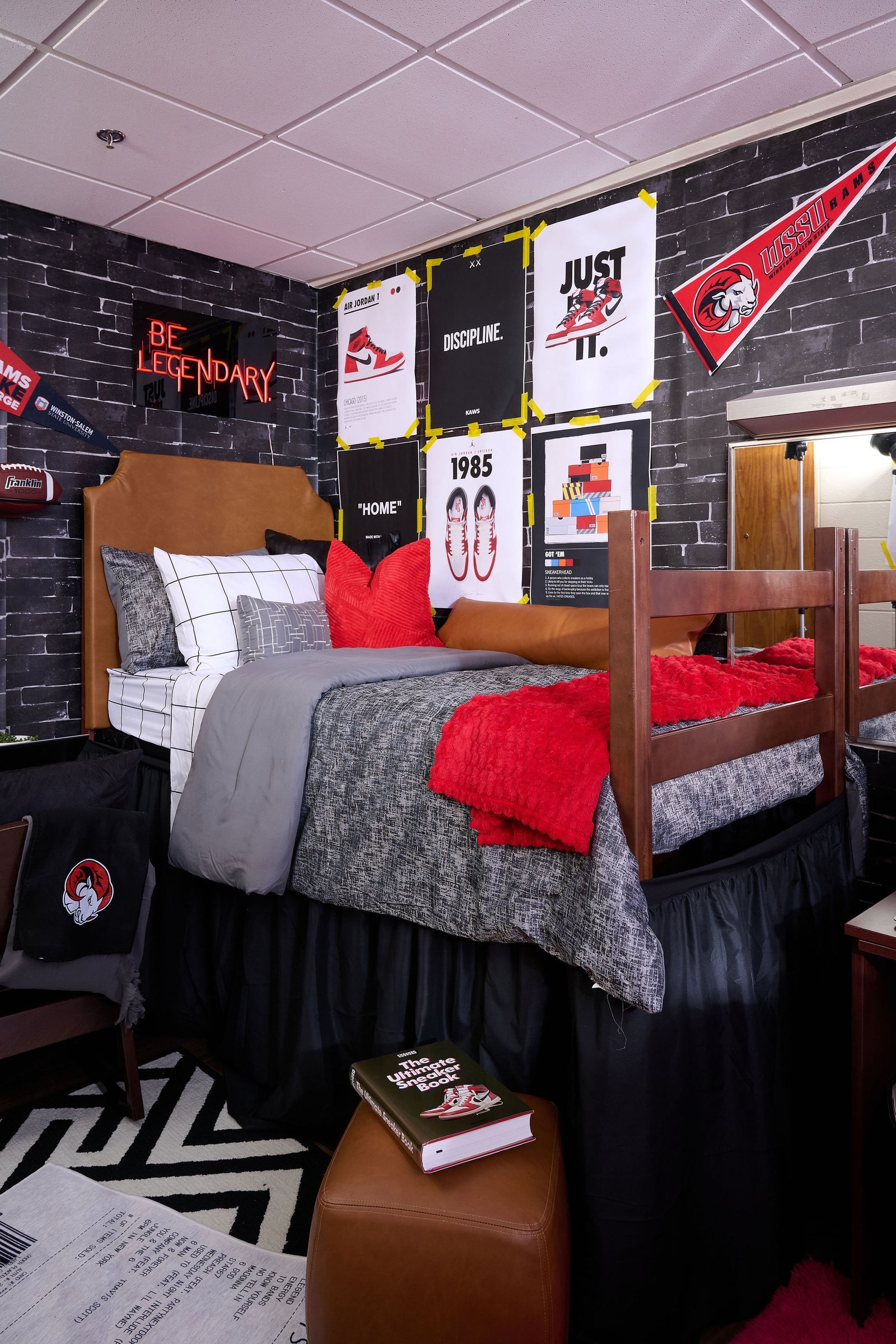
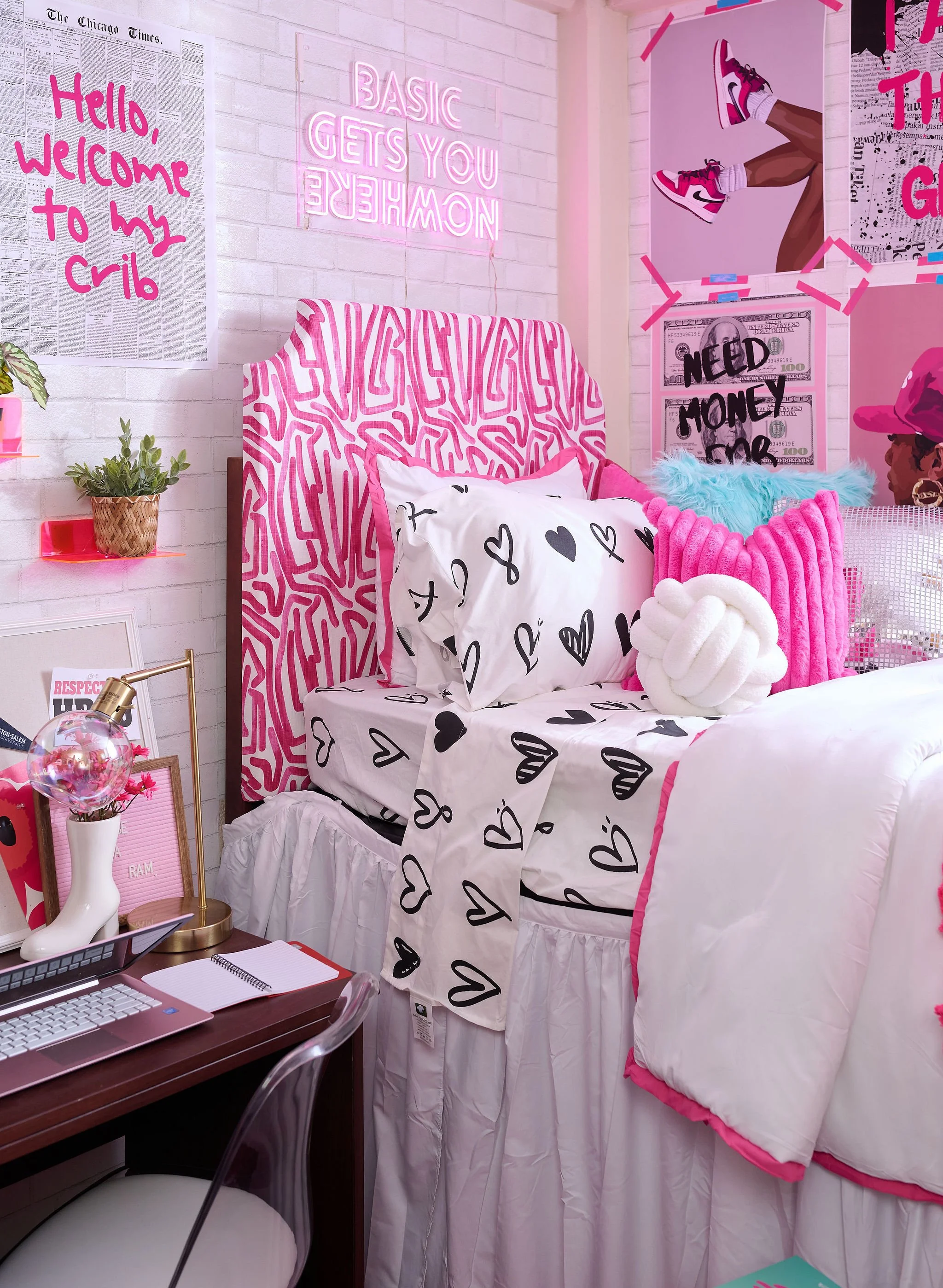
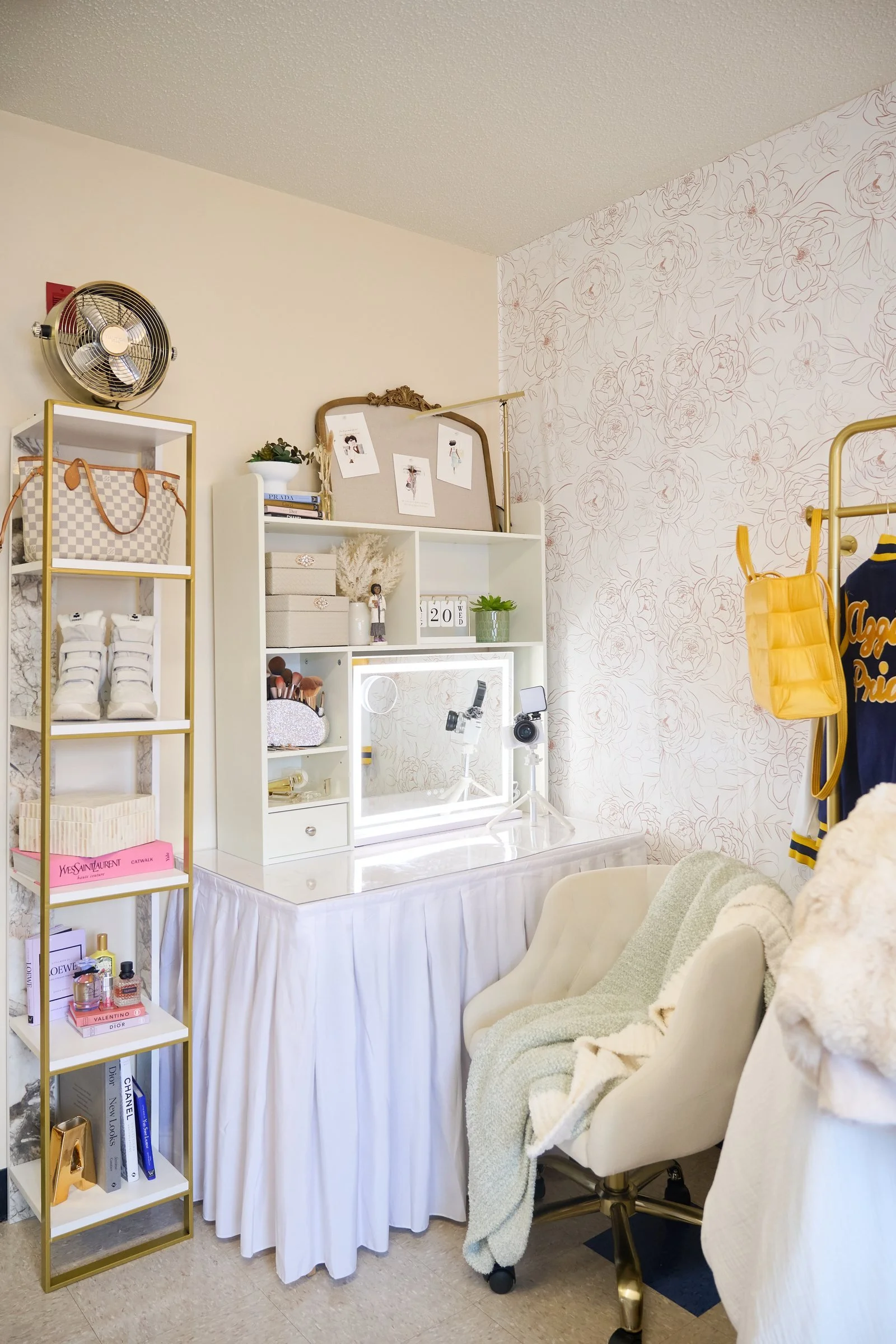
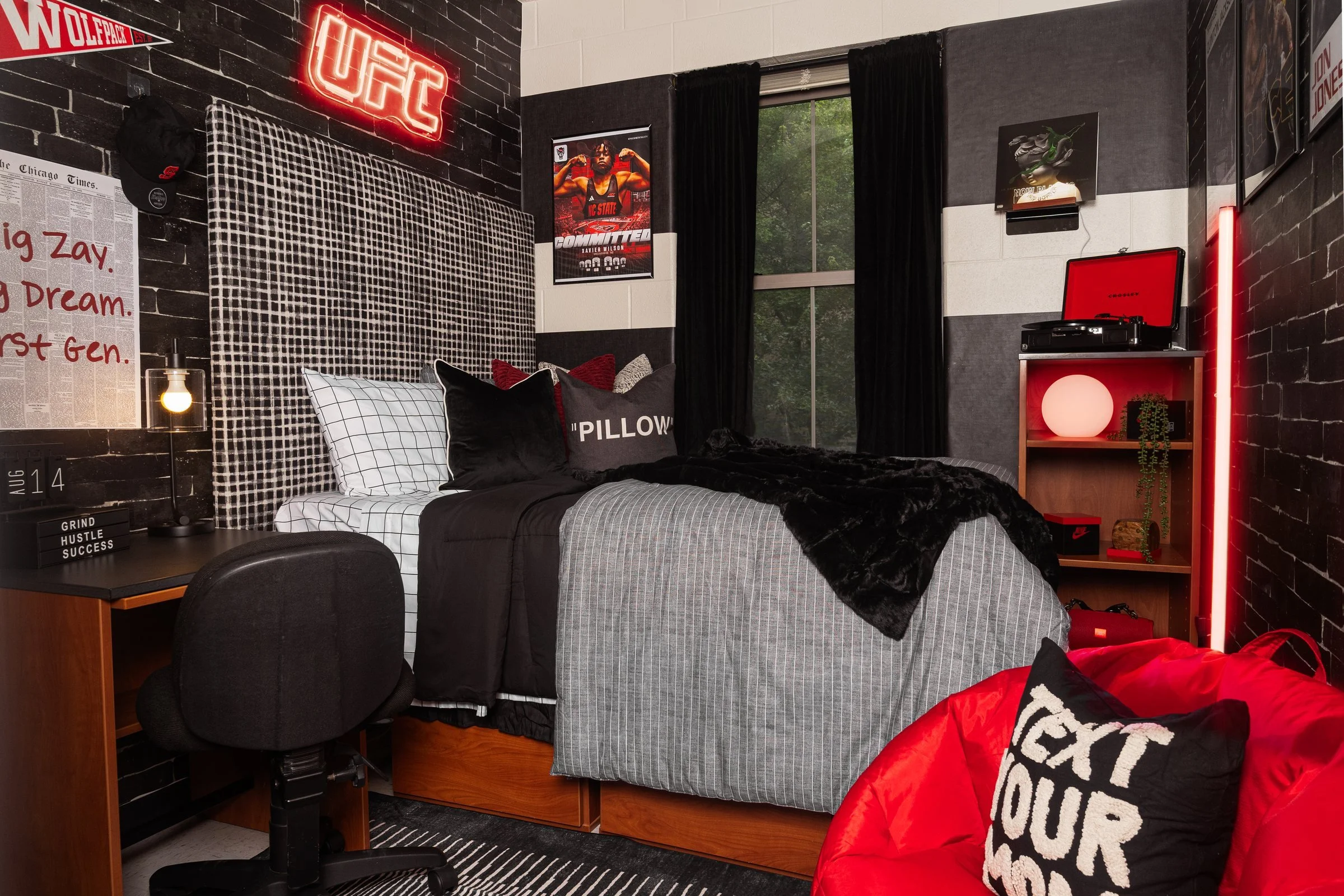
It comes out on reveal day, when a first-generation college student — expecting cinderblock walls and a bare mattress — opens the door to a room that has been designed, in every detail, for them. Some scream, some cry. Some stand in the doorway with their hands over their faces. Taniya, at Johnson C. Smith University, looked around, tapped her thumb and index finger together, and delivered her verdict: "That ate though, Ms. Ebony." At Clark Atlanta, Beautifull Sheppard declared to her Instagram followers, "I got the best dorm room in Merner Hall. Argue with your momma, not me."
Behind the door, and behind the name, is Ebony Staten: interior stylist, founder of The Vogue Room LLC, and for the past eight years, the force behind The Vogue Room Foundation, a nonprofit that designs and installs complete dorm room makeovers for first-generation college students, most of them arriving at HBCUs across the South.
A post, and a leap
The foundation began with a scroll. In 2018, two years after launching The Vogue Room LLC, Ebony came across a post from Michelle Obama — a photograph from her Princeton years, and a message to first-generation students: Be brave. Stay with it.
Ebony is a first-generation college graduate herself. Unlike many, she had parents who, though they hadn't gone to college, believed in education and made sure she had what she needed. The post made her sit with an uncomfortable truth: not every first-generation student has that. Many navigate college entirely alone, without anyone who has walked the path ahead of them.
That graduation season, she created a dorm room makeover application and sent it to a few contacts in the Charlotte-Mecklenburg school system. Ebony took a leap of faith without knowing the who, what, or how.
Her first recipient enrolled at North Carolina Central University, Ebony's alma mater, and was assigned a room two doors down from where Ebony had lived her sophomore year. She returned to the place that shaped her and built a space where another first-generation student could begin building her own future.
"I realized I wasn't just decorating a dorm room," she says. "I was helping a student begin one of the biggest chapters of her life with confidence, dignity, and the feeling that someone believed in her."
The moment most people don't see
There is a particular quiet on move-in day that the foundation was built to answer. Down one hallway, a family unloads coordinated bedding, storage bins, a full setup. Down another, a student arrives by Uber with the clothes on their back and a small bag. It is a story Residential Life directors have told Ebony more than once: no bedding, and sometimes not even the basic essentials.
"Not every student begins college from the same starting line," Ebony says. "Your environment sets the tone for your semester."
A dorm room is a first home away from home: where a student wakes for their first college class, studies through the night, celebrates, recovers, prays, laughs, and dreams. Years later, students still tell her what theirs meant. One called her room "the hangout spot." Another said it was the one place that felt safe after hard days. A former recipient recently FaceTimed her from her first apartment, wanting to talk through design ideas — further proof, for Ebony, that the impact outlasted the room.
What the reveal video doesn't show
The reveals are cinematic. The work is not.
It looks like an SUV packed past the rearview mirror. Designing to incomplete room dimensions, estimating wallpaper panels from YouTube move-in videos, then walking into a room that looks nothing like the photos. An email five days before move-in: no wallpaper, no fairy lights, no LED lights — and a full redesign on the fly. Dozens of bags carried up four flights in 98-degree heat because the elevator is out. On campus at 9:30 a.m., pulling out at 5:30 p.m., then driving five or six hours to the next campus, because HBCU move-in schedules run back to back.
For the past year and a half, Ebony has continued this work while navigating the unexpected and tragic loss of her father to a drunk driver. He was one of the parents who, without a college degree of his own, made sure his daughter had what she needed to earn hers. Through the grief, she has kept loading the SUV, climbing the stairs, and standing at the door on reveal day, because she knows what that moment means to a student who is the first in their family to walk through it.
"The moment a student opens that door, every mile driven, every late night, every pivot becomes worth it," she says. "That's the magic people see. Everything behind it, that's the part they don't."
An open question for the industry
Ebony is direct about what she believes this industry could be. Design is a profession; designers deserve to be paid. But she poses a question she thinks more of us should sit with: not whether designers should give their work away, but how we can use our gifts to leave our communities better than we found them.
"Imagine if every designer committed to giving back just once a year — one family, one classroom, one shelter, one senior living community," she says. "The ripple effect would be incredible."
The foundation was never meant to be a solo act. Over the years, designers, vendors, and home brands have contributed product, hands, and expertise, and there is room for more. Product donations, installation-day volunteers, student sponsorships: there is a place in this work for anyone in the industry willing to take it.
What a dollar becomes
Donations to The Vogue Room Foundation become College Dream Kits — 25- and 50-piece sets of dorm essentials: bedding, towels, storage, cleaning and laundry supplies, desk accessories. They become complete room makeovers. And they become something harder to itemize: one less barrier between a first-generation student and the reason they came.
"Every gift, regardless of the amount, helps us create spaces that remind students they are seen, supported, and worthy of every opportunity college has to offer," Ebony says.
Support The Vogue Room Foundation: Donate here
The Vogue Room Foundation has been supported over the years by partners including Tempaper, Spoonflower, DormCo, The Home Depot, Glasshouse Interiors, School Scents, The Honey Pot, Young Kings, BeRooted, At Home, AccentTouch, LeighDeux, House of Truluck, Saint by St. Clair, and The Mattie Fund, with Mitchell Black joining this year.